
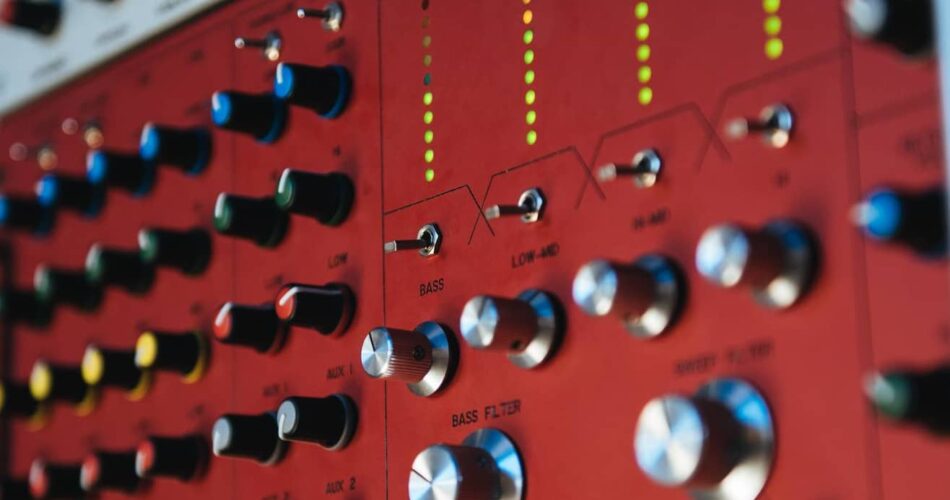
It is the centrepiece of a sound system. Depending on where you are, people call it a preamp, a dub amp or a dub preamp. It is the box that decides how you sound.
This page lists the manufacturers I know of, in France and across Europe, with what I think of them where I have had their gear in my hands. If I have missed one, tell me in the comments and I will add it.
To hear what a 4-way preamp does, try the blog’s online dub preamp: load your track, kill the sub or the mids, and listen to the difference.
What a dub preamp actually does
Worth knowing what you are buying. A sound system preamp does four things, and it is the combination that matters:
It brings the signal up. A turntable, a media player, a phone: every source arrives at a different level. The preamp brings them all to the same clean level before the rest of the chain.
It splits the spectrum. That is the internal crossover. It separates the sound into frequency bands, one output per band, each going to its own amp and speakers. This is what lets you drive subs, mids and tops separately.
It puts the frequencies under your hands. The kill switches. You cut the bass, you bring it back, you scoop the mids. This is where the selector plays.
It sends the effects. A send / return loop for your delay, reverb and siren. Without it you are stuck.
How to choose yours
Six questions, in this order:
Mono or stereo? Sound system is historically mono. If you only play outdoors on a wall of speakers, mono is enough. If you play at home, in bars, on radio, or you produce, stereo changes everything. Several builders now offer stereo units.
How many ways? 2, 3, 4 or 5 bands. More ways means more control, but also more amps, more cables and more settings to keep on top of. Start from the number of ways your system actually has.
Analog or digital? Analog has the grit and the simplicity. Digital brings precision, memory, and often built-in limiters and time alignment.
Are the crossover frequencies adjustable? On many analog preamps they are fixed at build time. Some builders, Klementz and Mostec among them, use frequency boards you physically swap. On DSP units you set them from a screen. If you plan to grow your system, look closely at this.
Do the EQs actually cut? Watch this detail, it changes everything: many equalisers only attenuate, by around 15 dB. A real isolator goes to zero. When you put the bass at minimum, you want no bass at all.
And the after sales support? The criterion everyone forgets and that costs the most. These units are built in small batches, often by one person. Ask yourself who will answer in three years if a fader dies, and whether parts will still exist.
Manufacturers in France
Klementz Audio
Built in small batches in France. Historically stereo modular preamps and custom units, with swappable frequency boards. Today most of the range sits in the Dub Mixer: preamp, isolator filters, delay and siren in a stereo unit under 1 kg. A stereo 4U rack with DSP is in the works, with internal effects and compression on every output.
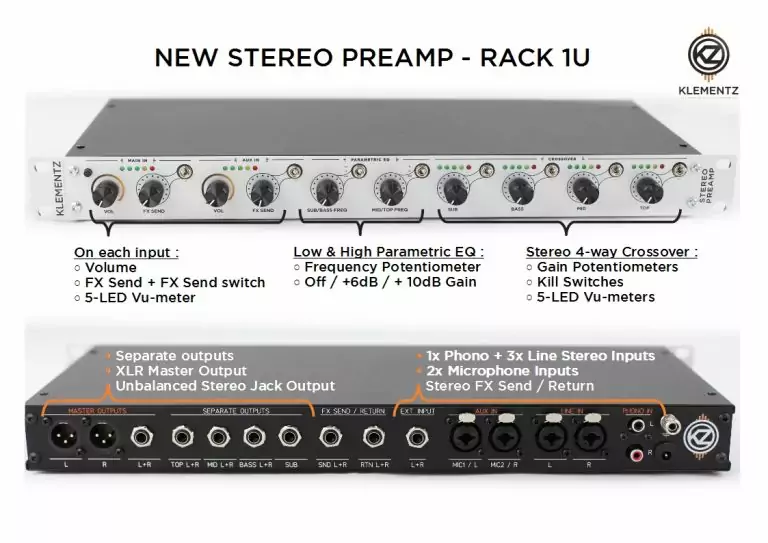
→ The Klementz Audio page: the range and the 4U rack
Dub Sonic
Jean Rambaud builds in the Vendée, western France. Dubsonic was a sound system before it was a workshop: Jah Shaka in 2009, Aba Shanti-I in 2010, on his own wall. The preamp came at the end of 2010, built on a JTS blueprint.
24 dB/octave active filter, frequencies customised at order time, unbalanced outputs. The Dubbox is €600.
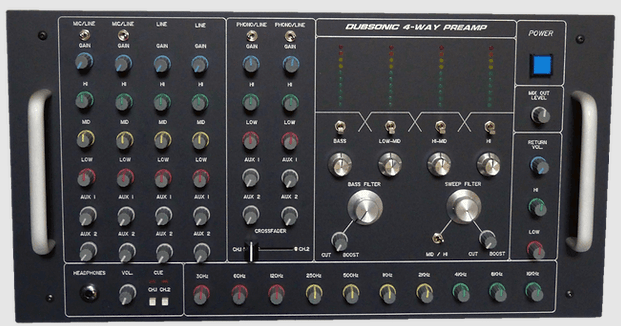
→ The Dub Sonic page: the JTS lineage, the range and prices
JB Audio Units
Builds in France: a 5 way preamp, a bass processor, an echo unit, a reverb and two double sirens. Listed prices run from €275 to €580.
Units in stock ship within 48 hours. Customisation goes through three set options: engraved faceplate, crossover frequencies, needle VU meters.
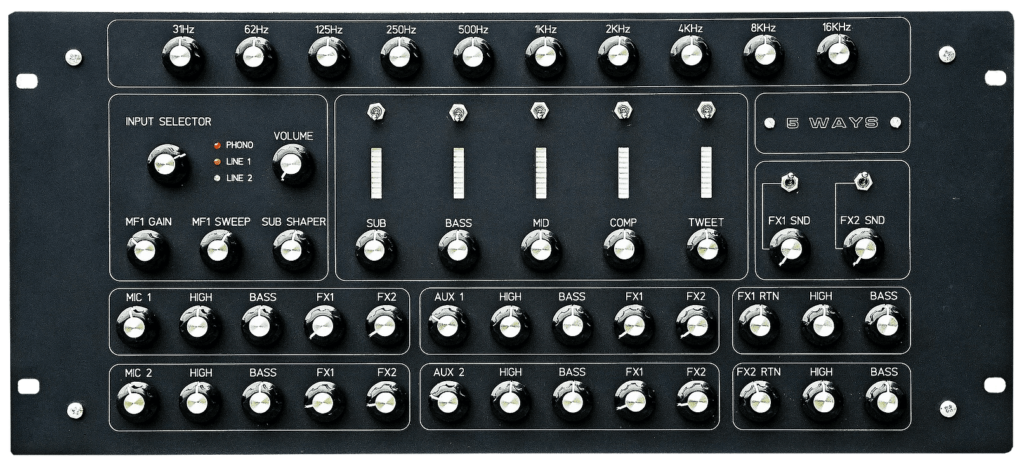
→ The JB Audio Units page: the range, the options and lead times
Leviel Audio (Louis Leviel)
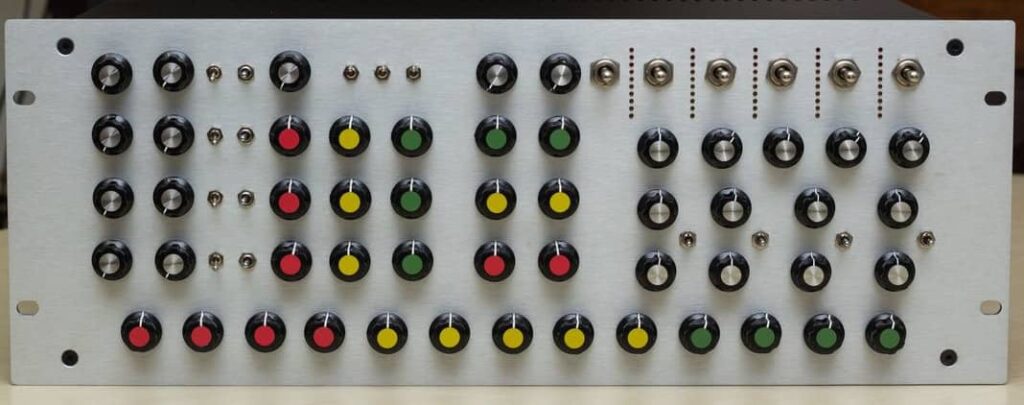
Independent French builder, active since at least 2022. Two lines: a Standar 5W4U mono 5 way, and custom stereo preamps.
Fully analog, four band fully parametric EQ with adjustable Q, balanced outputs. Found at Jah Chalice, Tropical Dubwise and Chaka Chaka. Contact goes through his Facebook page.
→ The Leviel Audio page: the Standar 5W4U and custom stereo
Manufacturers in the rest of Europe
Mostec (UK)
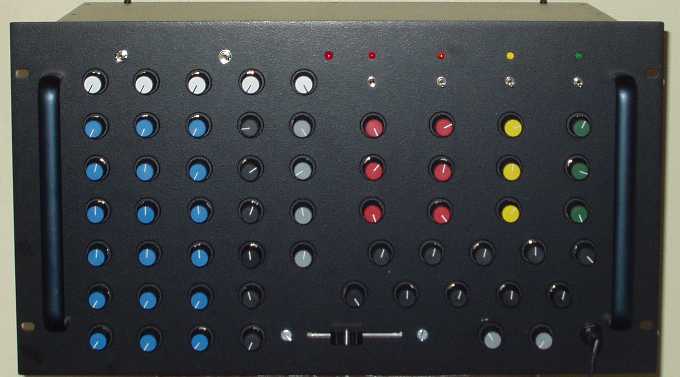
Mark Skeete builds in Leyton, east London, since 2002 according to his site. Worth saying: I know Mark, and I learned a lot from him.
One semi-parametric EQ per way — four on a 4 way — and a kill switch per way. Crossover frequencies are set at order time. The range runs from the desktop MicroPre to the 4 Way-TVU with VU meters, plus a digital echo and a siren.
→ The Mostec page: the range, the per-way EQ and the crossovers
Sage Sound (UK)
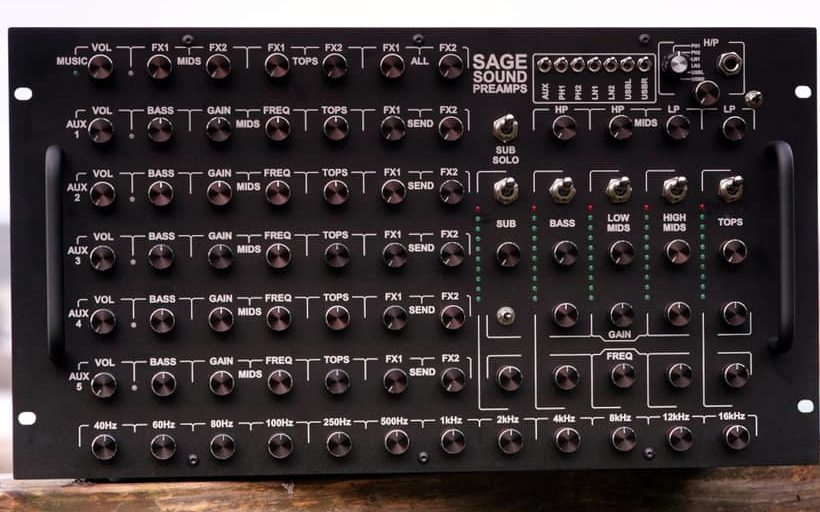
Crossover frequencies are set from a screen, and the units carry delay for time alignment, limiters and noise gates.
Current range: 3u (5 way mono, analog, ~£1,275) and 5u (5 way stereo DSP, ~£1,675), plus 1U modules. Sage closed in May 2021 and relaunched in late 2024 under a new company.
→ The Sage Sound page: the closure, the comeback, the range and prices
JTS, Jah Tubby’s (UK)
Keith builds from Hackney in east London, and the site claims 1971. Aba Shanti-I started there as an MC.
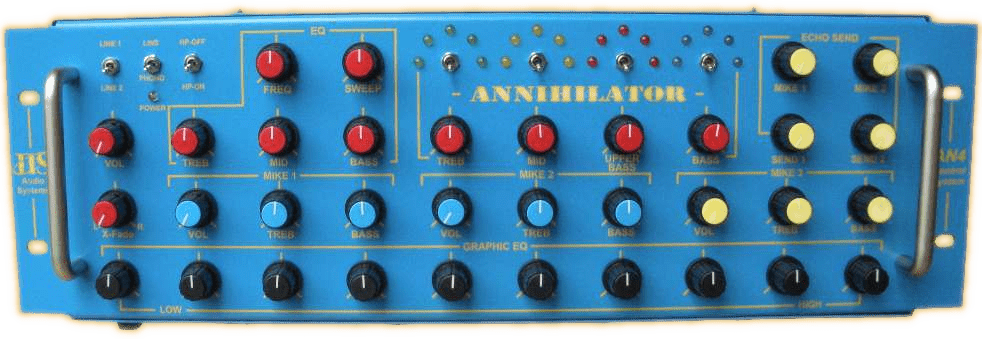
Two 4 way models in the catalogue: the Enforcer EN4 (black, 4 mic channels) and the Annihilator AN4 (blue, 3 channels). No published prices or crossover points. The catalogue extends to 10,000 W amps and bins.
→ The JTS page: the Enforcer, the Annihilator and second hand values
Sounds and Pressure (UK)
Phil Bush, an engineer from the automotive industry, full time on audio since 2019. Range entirely mono and analog, from the Mini 3 way (£550) to the Alpha 5 way (£2,225).
His signature function is the Growl: an analog circuit reproducing the saturation of a valve amp pushed on the sub. He also runs an all-valve sound system.
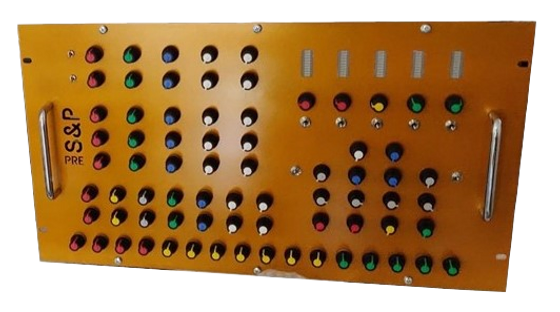
→ The Sounds and Pressure page: the range, the Growl and his choices
Built By Moses / Moses Audio (UK)
A one man workshop, renamed Moses Audio around 2024. The main unit is the stereo 6U: 5 way fully analog, 24 dB/octave variable filters meant to replace an external DSP, 16 band boost-only EQ and 5 parametrics.
He also builds 1U (£500) and 2U (£650) bass preamps, on pre-order in his shop. The 6U is not sold through the online shop: it is built to order, and orders are not open yet (November 2026).

→ The Moses Audio page: the stereo 6U and the bass preamps
Valv-a-tron
Paul Huxtable, also known as Paul Axis, builds all-valve units in Huddersfield: preamps, KT88 amps and an analog delay, as one-off commissions.
No catalogue, no public pricing. He also runs his own sound system, Axis Valv-a-tron.
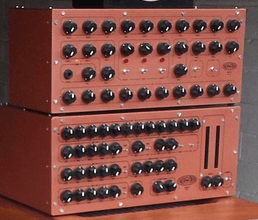
→ The Valv-a-tron page: the documented units and what all-valve means
Ras EFX
Known for his sirens and effects, he also builds sound system preamps: RAS-3000 (3 way), RAS-5000 (4 way), RAS-5500 (5 way), ST-4000 studio and MP-400 portable.
Fully analog, semi-parametric EQ per way, kill switches, three assignable send/return loops. Budget £90 to £760 for sirens and effects; preamps go through a quote.
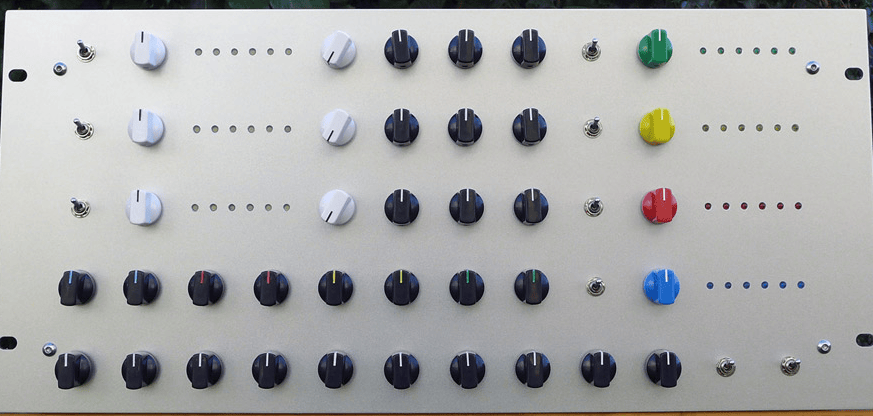
→ The Ras EFX page: the preamps and the assignable loops
Links
He made innovative machines, including the SEG3, one of the best known sirens in the scene. He is no longer with us and nothing is produced any more. If you come across one second hand, you know what it is.
Separate preamp, or all in one?
That is the real question once you add it up.
The classic setup is one box per function: the preamp with its filters, a mixer in front, a delay, a siren. Each one is good at its job, you replace any piece on its own, and you build a rig exactly to your taste. On the other side, that is four power supplies, a dozen cables, a flight case, and control knobs that end up small and cramped as soon as you try to compact it.
The all in one approach puts those functions in a single machine. You lose modularity, you gain space, setup time and total cost.
Both make sense. If you are building a fixed four way wall and want every link replaceable, go separate. If you play often, you travel, or you are starting out and would rather not stack up purchases, look at all in one.
Missing a manufacturer?
This list lives on feedback. If you know a builder who is not here, or something is wrong or out of date, say so in the comments and I will fix it.
If you are still deciding between a preamp and separate units, start with the advantages and limitations of a sound system preamp. For the connections, see the signal chain wiring diagrams.
Thanks for reading, I hope this article was helpful!
🙏 If you enjoyed it, please share on your social networks 🙏
And if you have any remarks, thoughts, experiences or arguments to share:
Feel free to share in the comments below!
Glad that this is here for me too see. Im old school and love the sound systems from my school days 1975 times.
Good list of Preamp Manufacturers.
I’ve just built my second preamp The first was 40 years ago and the second was started in 2025 and completed in 2026 but at the moment there is no intention to mass produce it.